
News & insights
Explore our latest blogs

How to Do a Systematic Literature Search for a Research Project
A practical guide to systematic literature searching. Learn how to find academic papers, build search strategies, and evaluate research evidence efficiently.
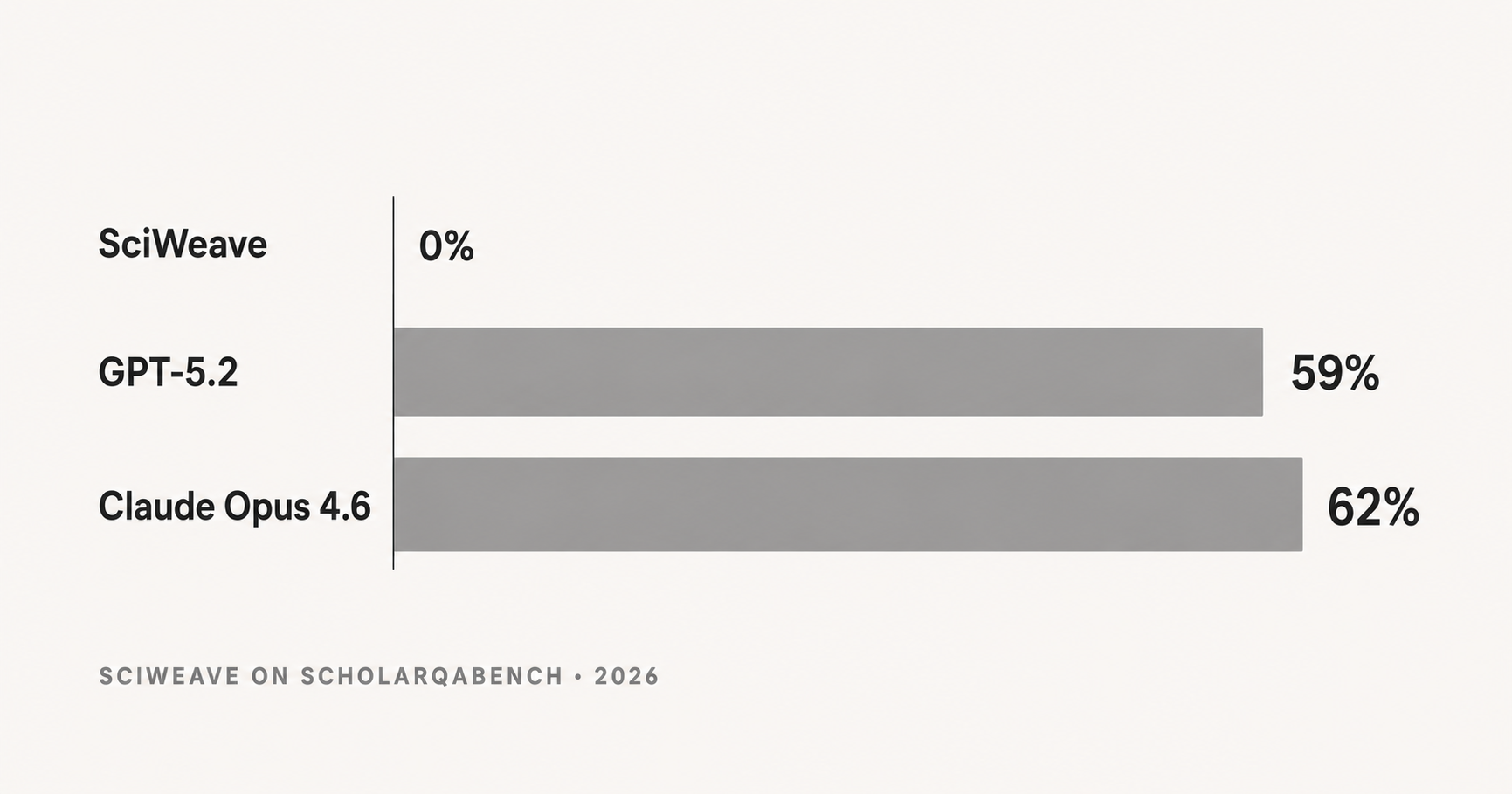
Zero hallucinated citations: SciWeave's ScholarQABench results
On ScholarQABench, SciWeave hallucinated 0 out of thousands of references. GPT-5.2 and Claude Opus 4.6 hallucinated 59% and 62%, respectively.

Which Papers Matter Most? A Guide to Identifying Influential Research
Learn how researchers identify influential papers in a field by analyzing citation patterns, key studies, and research debates across the academic literature.
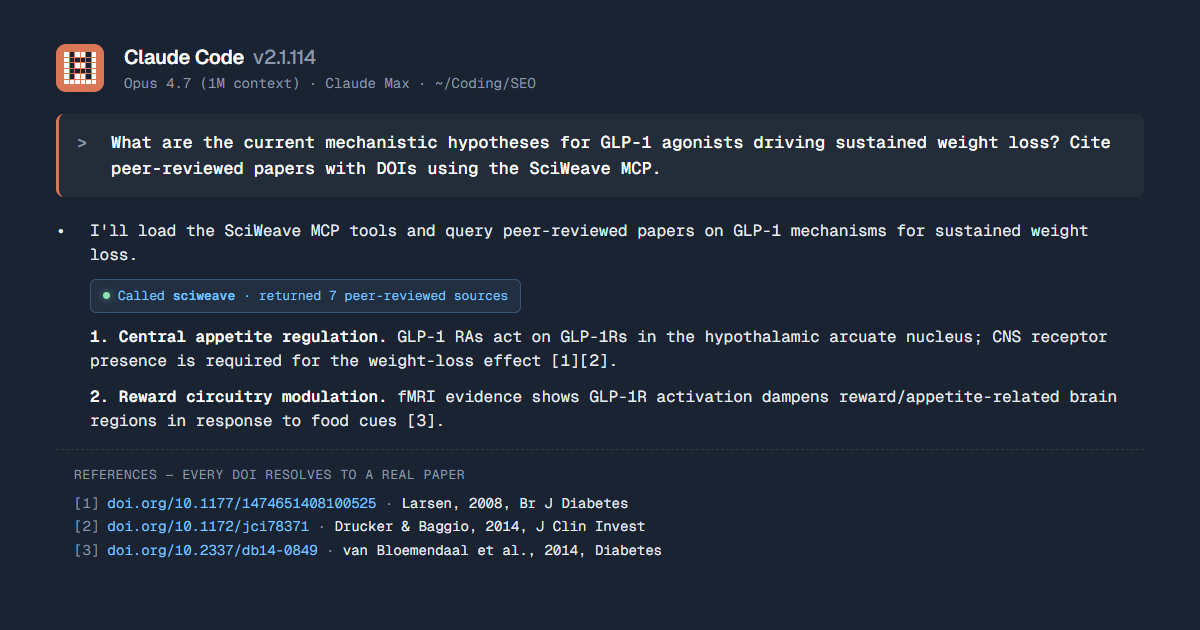
The SciWeave MCP is live
SciWeave is now a Model Context Protocol server. Claude, ChatGPT, Codex, Cursor, and Windsurf can search 300 million scientific works with real DOIs — free to start, usage-based after. Here's what it enables and how to install it.

What Business Research Papers Often Get Wrong About Causality
Why business research often overstates causal claims, with real examples from strategy, management, and empirical studies.

The Hidden Cost of Chasing Novelty in Academic Research
Novelty drives publishing and funding, but often weakens science. Why chasing what’s new can undermine cumulative understanding in research.

The Problem With “Best Practices” in Research (And Why Context Matters More)
Best practices promise rigor, but often ignore context. Why rule-based methods can weaken research, and why judgment still matters in science.

When Evidence Conflicts: How Experienced Scientists Reason Under Uncertainty
An in-depth look at how experienced scientists reason, decide, and design research when evidence conflicts and uncertainty cannot be resolved.

From Literature Review to Knowledge Map: How Senior Researchers Synthesize Evidence at Scale
Learn how senior researchers move beyond narrative literature reviews to synthesize evidence, manage uncertainty, and understand mature scientific fields.

How to Audit a Research Claim: A Step-by-Step Framework Beyond Peer Review
A step-by-step framework for researchers to evaluate scientific claims beyond peer review, covering study design, measurement validity, bias, robustness, and evidence strength.

The PhD Survival Toolkit: Study Strategies That Save Time and Reduce Stress
Practical strategies PhD students can use to stay focused, manage workload, and reduce stress while keeping research moving forward.

Why Peer Review Does Not Guarantee Reliable Research
An examination of the limits of peer review and why reliable scientific knowledge emerges through accumulation rather than publication alone.

How to Systematically Identify High-Quality Papers Without Relying on Journal Prestige
A practical framework for evaluating research papers under time pressure. Learn how to assess study design, bias, transparency, and credibility beyond journal prestige.

How Scientists Evaluate What Counts as Good Evidence
Why scientists often disagree about evidence, and how disciplinary norms shape what counts as rigorous, credible research.

When to Trust a Preprint (And When Not To): A Scientist’s Guide to Reading Unreviewed Research
A practical guide for scientists on when to trust preprints and when to be cautious. Learn how to evaluate unreviewed research responsibly.

Why Most AI Tools Fail Researchers (And What Actually Works)
Most AI tools fail researchers not because of intelligence, but misalignment. Learn what actually works for evidence, traceability, and trustworthy research.

From Research Question to a Defensible Literature Review: A Workflow That Scales
A step-by-step workflow for turning a research question into a defensible literature review. Learn how experienced researchers search, evaluate, and synthesize evidence.

Top 5 Custom GPTs for Scientific and Academic Research on ChatGPT
Discover the best Custom GPTs on ChatGPT for scientific and academic research, including tools for literature review, citations, and study analysis.

How To Avoid Fake Citations When Using ChatGPT For Research
ChatGPT can generate convincing but fake citations. Learn why this happens and how to use ChatGPT safely for academic and scientific research.

Using ChatGPT for Literature Review: Limits, Risks, and Best Practices
ChatGPT can help with literature reviews, but it also creates real risks. Learn where it works, where it breaks down, and how to use it responsibly.

Productive Mornings for Researchers: Small Habits That Save Hours Each Week
Practical morning habits top researchers rely on to protect focus, reduce decision fatigue, and save hours each week without adding more work to the day.

Recognizing True Novelty in Scientific Research Without Falling for Buzzwords
A practical guide to spotting genuine novelty in scientific research without being misled by buzzwords, inflated claims, or superficial innovation.

Habits Every Scientist Should Build to Avoid Confirmation Bias in Research
Discover practical habits scientists can use to avoid confirmation bias, improve the reliability of their research, and strengthen evidence based conclusions.

How to Read Academic Papers Faster Without Missing Key Insights
Practical strategies to help students and researchers read academic papers faster while still catching the arguments, methods, and insights that matter most.

Evidence-Based Policy: Using AI to Validate Scientific Claims in Legal Briefs
Learn how legal teams can use AI to verify scientific claims, strengthen evidence-based policy, and avoid unreliable research in legal briefs. A practical guide for lawyers, policymakers, and researchers.

What Can You Do with SciWeave?
Discover how to use SciWeave, the AI-powered research assistant that delivers accurate, peer-reviewed answers. Learn how to ask better questions, verify sources, and save time finding trustworthy scientific information.

A Practical Guide for Students: Reading Through Academic Papers Faster
Learn how to read academic papers faster without losing understanding. Practical tips for students to find key ideas, stay focused, and save time.

How to Prepare for Comprehensive Exams Without Burning Out
A practical guide to preparing for comprehensive exams with focus, confidence, and sustainable habits that help you avoid burnout and stay sharp through the entire process.

Why We Shouldn’t Blindly Trust Peer Reviewed Articles - And How AI Can Help
Why ‘peer-reviewed’ isn’t a guarantee. Understand false positives, the replication crisis, and how AI might help us see research more clearly.

How to Find Reliable Research Sources When ChatGPT Gets It Wrong
ChatGPT isn’t always accurate. Learn how to find reliable research sources, fact-check AI answers, and use trusted tools for credible academic work.

AI Fact-Checking Techniques Every Journalist Should Know
Discover how journalists can use AI to verify claims, find credible news sources, and combat misinformation quickly and accurately.

6 Practical Tips to Improve Your Academic Writing
Struggling with student essay writing? Learn 6 actionable tips to improve your academic writing style and the AI tools that can help.
Using an AI Research Assistant to Boost Your Academic Game
Discover how students are using AI research assistants to save time, improve research quality, and stay focused. Explore the best AI tools for student research today.

AI Tools Every University Student Should Know About
Discover the top AI tools that help university students write better essays, research faster, stay organized, and boost productivity - all without cutting corners.

AI and Law: Improving Legal Research
Discover how AI improves legal research. Learn how tools help lawyers and students answer complicated questions and find answers backed by academic research.

How to Save Time on Essay Research Without Sacrificing Quality
Learn how to use AI research tools and practical strategies to speed up essay writing without compromising quality. Perfect for students balancing deadlines and results.

Mastering Research: A Step-by-Step Guide for Students
A practical, step-by-step guide to academic research for students. Learn how to write a research paper, conduct a literature review, and choose the right tools - including when to use AI research assistants.

Analyzing Research Data: Essential Tools and Techniques for Students
Learn how to analyze research data with confidence. This practical guide covers essential tools, techniques, and tips for students working with quantitative and qualitative data to produce stronger, more reliable research papers.

How to Write a Research Paper That Gets Published
Want to publish your research paper in a top journal? Learn how to craft a strong question, structure your paper, avoid common pitfalls, and navigate peer review with confidence - plus tips on preprints and promotion.

How to Locate High-Quality Sources Fast
Learn how students can quickly find credible research articles using smart strategies and AI tools.

Preprints, Open Access, and AI: Modern Publishing for Scientists
Discover how preprints, open access, and AI tools are transforming scientific publishing. Learn how to share your research paper faster, reach a global audience, and use AI for research effectively.

Top AI Research Assistants to Streamline Your Academic Research
Discover the top AI research assistants for scientists and academics. Explore tools like SciWeave, Elicit, and Julius AI that streamline literature reviews, summarize research papers, and improve academic writing. Perfect for anyone using AI for research.
.svg)


.svg)
.svg)